

Director of the Project
Professor Karen Malone (PhD, BEdHons, BEd)
Professor of Environmental and Childhood Studies, School of Social Sciences, Media, Film and Education, Swinburne University of Technology
Professor Malone’s research, publishing and teaching is located in the nexus between the natural sciences and the new humanities. She researches how educators, children and communities respond to the impacts of global ecological challenges such as climate change, biodiversity loss, waste and radiation. She has expertise in qualitative and post-qualitative research using critical, ecofeminist posthuman theoretical and indigenous approaches within place-based relational ontologies. She has been Chief Investigator in 44 funded research grants and attracted 2.6 million dollars in large and small-scale projects in 19 countries. She has published 12 Books, 42 Book chapters, 62 Journal articles and 37 NTROs/reports. Her scopus goggle scholar metrics identifies she has had 9729 citations, h-index 48, and i10-index 96, and in 2022 she was awarded the status as being in the Top 2% Most Cited Scientist in the World, by Stanford University, (Education, Geography, Social Sciences), and she won a lifetime award as the 3rd most cited author in environmental education in the world. She has presented 50 keynotes and 58 papers in national and international conferences. She has supervised 17 students to doctoral completion and in 2022 she won the Australian Council of Graduate Research (ACGR) National Excellence in Graduate Research Supervision Award. In 2015 she was presented with the Kazakhstan International Presidential Award by President Nursultan Nazarbayev, for service to country through her UNICEF supported child rights and child friendly cities research.
About this project
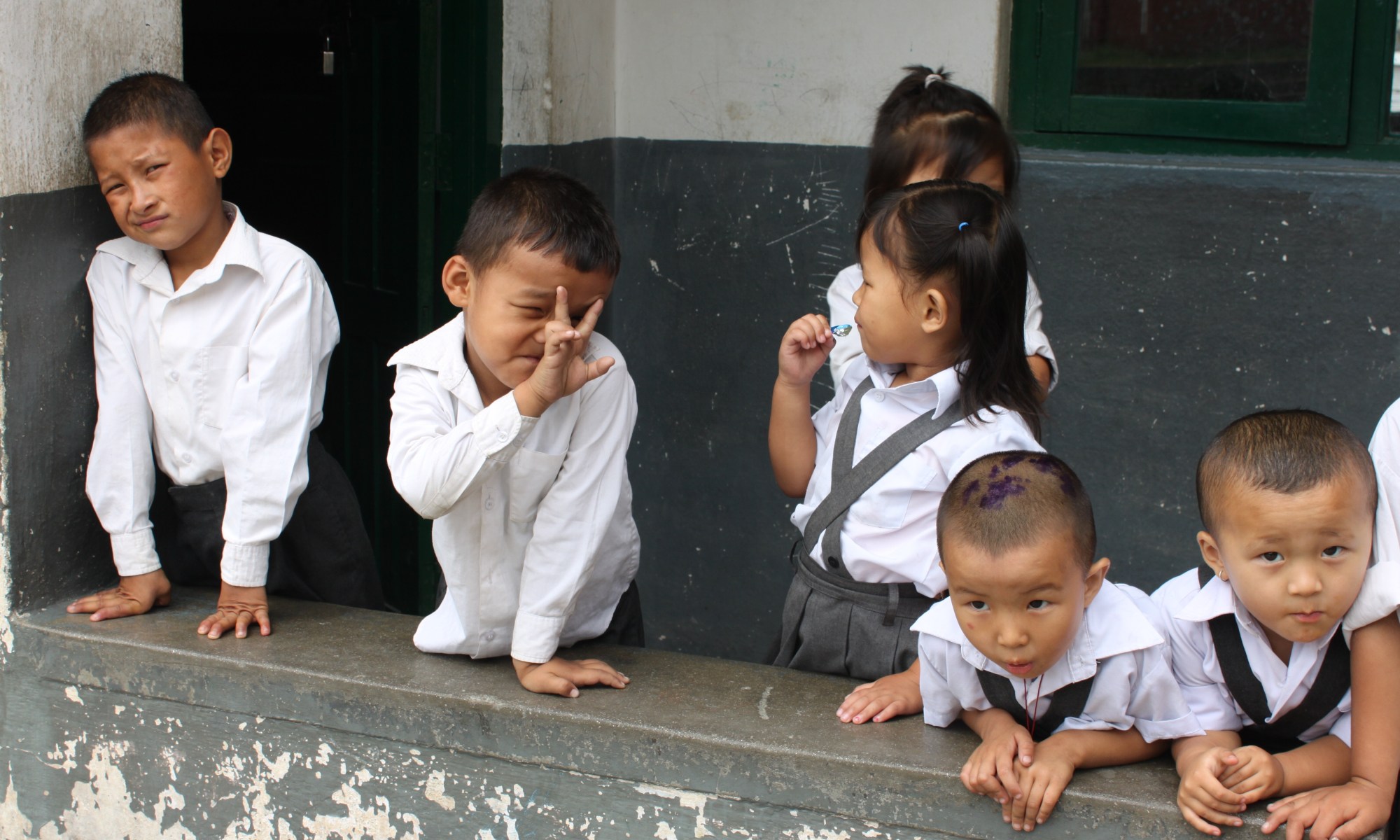
The Anthropocene, a human imprint at a global-scale. This site and the project Children in the Anthropocene explores how the fragility of children and their nonhuman companions are engaged in a dance of daily survival of shared vulnerabilities in our cities around the globe. It recognises the unsettling that the naming of the Anthropocene has administered – and will continue to administer – as a massive jolt to our collective imagination of our ‘selves’. The irony being we as a species, amongst others, find ourselves, both as the monster and maker of these precarious times. The concept of the Anthropocene assumes a generalized anthropos, whereby all humans and nonhumans are equally implicated and all equally affected. Through my research I seek to bring attention to the way the environmental crisis accentuates rather than diminishes differences between the privileged and the not so privileged; the human and the non human. Because we are not all in the Anthropocene together, the children and the nonhuman kin they share the world with, are far more in it than others.
This project has been funded through a number of grants provided by Swinburne University of Technology and external agencies including UNESCO, UNICEF Policy and Strategy, New York, UNICEF Kazakhstan, Kazakhstan National Government, UNICEF Bolivia, City Council of La Paz, UNICEF Albania, Albanian Prime Ministers Executive Office, Natural England, UK, GPT Urban developers, Stockland Urban Developers, Australian Social Sciences Association Linkage Grants, VicHealth.
If you would like to learn more about the many facets of the project Children in the Anthropocene please contact the Project Director Professor Karen Malone through this blog site or email directly on kmalone@swin.edu.au.
 Children in the Anthropocene